
Sole Proprietor Guides
Use this path if your business is not incorporated and you report business income personally.
These guides help sole proprietors build cleaner records, better expense habits, GST/HST awareness, monthly review routines, and year-end readiness without making the system more complicated than it needs to be.
Start with the layer that best matches where you are right now and follow a simple action plan
1. Get Oriented (Awareness)
Start with visibility, separation, and clean records.
Learn what needs to be separated early, what records should exist, and how money should move through the business so you can build stable habits from the start.
👉 Goal: Clarity — know what matters and what doesn’t
What to Do in Your First 30 Minutes
Start with visibility, not perfection. See what exists, separate business from personal, and create one reliable place for records.
Matching tools: Tax & Financials Starter Checklist
How to Set Up Record-keeping Without Overthinking It
Use one simple system for receipts, statements, and records that stays usable from day one.
Matching tools: File Naming & Record Storage Guide
What Actually Matters in Your First 90 Days
Build a few repeatable habits early so the business becomes easier to manage, track, and explain.
Matching tools: Basic Financial Habits Tracker • First 90-Days Priorities Checklist
2. Build Your System (Practice)
Put the right systems in place.
Put systems in place to keep your records current, meet your obligations on time, and maintain financial stability throughout the year.
👉 Goal: A working system you can rely on
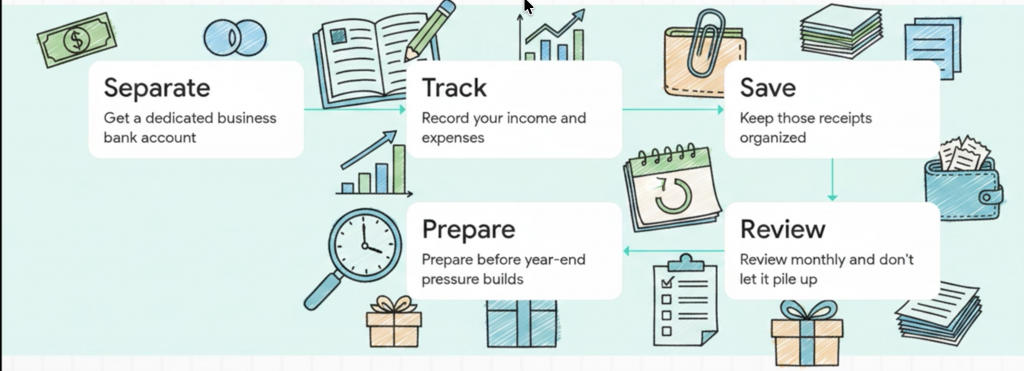
How to Track Expenses Without Making It Complicated
Create a simple expense-tracking habit that keeps receipts, categories, and business spending organized from month to month.
Matching tools: Sole Proprietor Expense Categories Reference • Sole Proprietor Expense Tracker Workbook
Your Monthly Money Routine
Use one simple monthly review habit to keep your records current, your numbers visible, and your obligations under control.
Matching tools: Monthly Review Checklist
How to Know When GST/HST Is Starting to Matter
A simple guide to help sole proprietors understand when GST/HST may start to apply, what the $30,000 threshold means, and how to avoid being caught off guard.
Matching tools: GST/HST Threshold Checker • GST/HST Awareness Worksheet
3. Run It Consistently (Maturity)
Move from basic habits to a fuller financial system.
At this stage, the goal is not just to track activity. It is to run a more complete system that helps you stay organized across the year, understand what your numbers are telling you, and prepare for tax and year-end with less stress.
👉 Goal: Confidence, consistency, and control.
When a Simple Tracker Stops Being Enough
Learn when basic trackers stop being enough and how a fuller workbook can help you manage records, reviews, and year-end more consistently.
Matching tools: Full Sole Proprietor Workbook • Full Sole Proprietor Workbook Guide
Understand Your Numbers and Use Them
Learn how to read what your income, expenses, and patterns are telling you so your numbers support better decisions, not just record-keeping.
Matching tools: Financial Interpretation Prompts
Prepare for Year-End Before It Arrives
Build enough structure during the year that tax obligations, reporting, and year-end preparation are easier to manage before they become urgent
Matching tools: GST/HST Threshold Checker • GST/HST Awareness Worksheet
Not Sure Where to Start?
- If you are new or disorganized, start with What to Do in Your First 30 Minutes.
- If money is already moving, start with Your Monthly Money Routine.
- If tax time or year-end is becoming stressful, start with Prepare for Year-End Before It Arrives.
- If simple tracking is no longer enough, start with When a Simple Tracker Stops Being Enough.
Related Explainers in This Path
Some guides link to short explainers when a concept needs more context. You do not need to read these first. Use them when a guide points you to them, or when you want a clearer explanation of a specific issue.
Useful Background Explainers
These Explainers are optional background reading. They are included for owners who want more context on common financial concepts that often create confusion during setup, tracking, review, or year-end preparation.
| Explainer | Useful when you are thinking about |
|---|---|
| What Counts as a Business Expense? | Whether a cost belongs in the business records |
| What CRA Means by a “Reasonable” Expense | Whether an expense is defensible and properly supported |
| Current vs Capital Expenses Explained | Larger purchases such as equipment, tools, computers, furniture, or vehicles |
| Owner Draws vs Reimbursements | Taking money out of an unincorporated business or paying personally for business costs |
| When a Spreadsheet Is Enough — and When It Is Not | Deciding whether simple tracking still works or a fuller system is needed |